
AI
ISP Back-Office AI Playbook: 8 Prompt Templates
Eight editable AI prompt workflows built for broadband operators — covering outage comms, board reporting, technical docs, and more. No integrations required.
Filed by Sonar, member
January 1, 2025 · 8 MIN · UPD JUN 22, 2026
Audio version
Narration generating. Check back shortly.
Contents
Use Cases
- 01Outage Comms
- 02Technical Docs
- 03Board Reporting
- 04Hyperlocal Marketing
- 05Competitive Intel
- 06Support Templates
- 07Staff Onboarding
- 08Grants & Regulatory
- Tips for Better Results
- Quick-Start Checklist
How to Use This Playbook
Who it is for
General managers, operations managers, CFOs, and marketing leads at broadband operators with 10,000 to 100,000 subscribers. If you are running a lean team with back-office complexity that outpaces your headcount, this was written for you.
What it covers
- Eight use case categories with workflow steps and ready-to-use prompts
- Variable placeholders in brackets for your company-specific details
- Verification checklists for each use case
- Tips for refining results and building a team prompt library
What it does not cover
Network operations, provisioning automation, or any task that requires real-time system access. This playbook focuses exclusively on knowledge-work tasks: writing, research, structuring, and drafting.
How to get started
- Find your biggest pain point and start with that chapter
- Gather the specific inputs for that task
- Copy the prompt, fill in the bracketed variables
- Run it, review the output, and adjust
Interactive mode: Click any yellow [variable] inside a prompt to fill in your own value. Same variables update everywhere. Your filled prompts stay saved on this device as you scroll through the playbook. This playbook is tool-agnostic: the prompts work in ChatGPT, Claude, Gemini, and similar assistants. No paid plan required, no BSS/ integration required.
Outage and Maintenance Communications
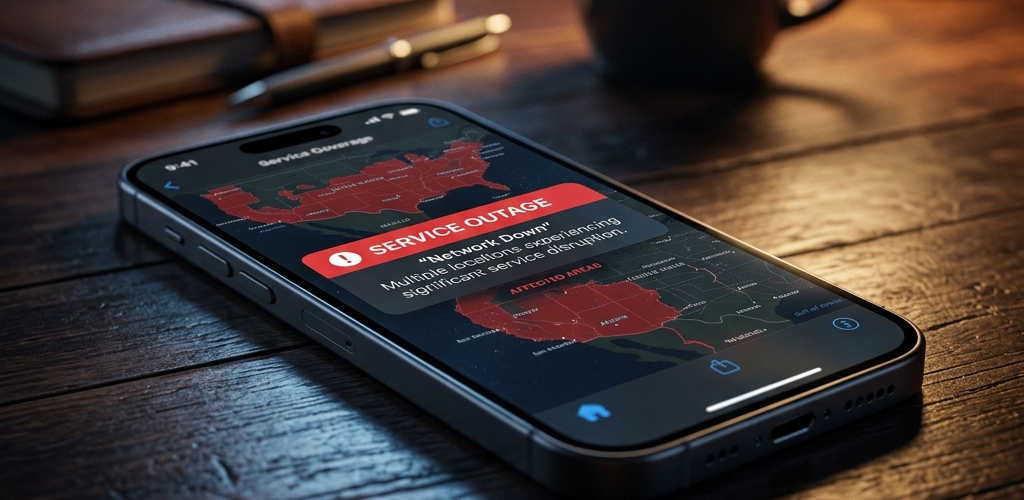
Outage communications written under pressure are usually not your best work. They go out late, miss key details, or strike the wrong tone. For a broadband operator whose differentiation is community trust and local responsiveness, a poorly communicated outage does more damage than the outage itself.
AI does not fix your network. It fixes your message, in seconds instead of minutes, at 2 a.m. when your team is running on no sleep.
Workflow
- 01Gather the facts: affected area, subscriber count, start time, current status, known cause (if any), expected resolution time
- 02Open ChatGPT or Claude
- 03Run the appropriate prompt below
- 04Review the output for accuracy. AI cannot verify your facts, only structure them
- 05Adjust tone if needed for your audience
- 06Send through your normal channels (email platform, SMS gateway, social)
Prompts 4
What to Verify
- All times and dates are accurate
- Service area description matches your actual affected area
- Contact information is current
Technical Documentation and Runbooks
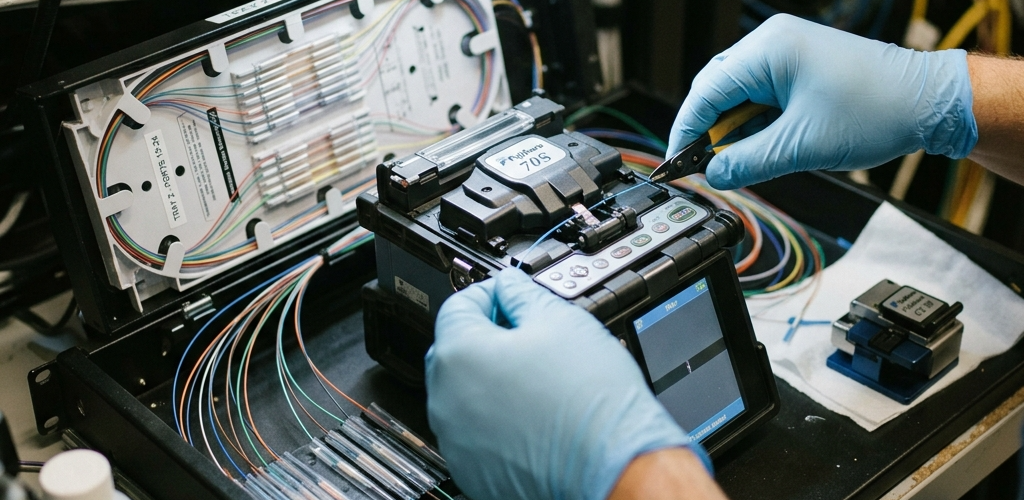
Every ISP has a version of the same documentation problem: the people who know how things work are too busy doing the work to write it down. New hires get tribal knowledge passed informally. Critical procedures live in one person's head. When that person leaves or is unavailable, the company pays for it in errors and delays.
AI cannot generate accurate technical documentation from scratch. But it is very good at taking the rough notes your team already has, the bullet points, Slack messages, email threads, and trunk notes, and turning them into structured, readable documents.
Workflow
- 01Gather raw source material (notes, email threads, Slack messages, existing drafts). Accuracy matters here; AI will structure whatever you give it
- 02Identify the audience and format (new hire? field tech? tier 1 support rep? runbook? SOP? FAQ?)
- 03Run the structuring prompt below
- 04Have the subject-matter expert review for technical accuracy
- 05Store in your knowledge base, shared drive, or documentation system
Prompts 4
What to Verify
- Technical accuracy of all steps (AI structures; your SME verifies)
- Steps are in the correct sequence for your specific environment
- Contact information and escalation paths are current
- Tool names and system names match what your team actually uses
Board and Executive Reporting

Board reports at scaling ISPs often take a disproportionate amount of senior time, sometimes a full day or more for what is essentially a structured narrative built on data your team already has. AI can take raw metrics and produce a clean first-draft structure in minutes, letting your GM or CFO spend their time on review, verification, and strategic narrative rather than on formatting and blank-page starts.
Workflow
- 01Gather all metrics and data you plan to include (verify these before feeding to AI; accuracy of the final report depends entirely on the accuracy of your inputs)
- 02Note any strategic highlights or priorities you want to emphasize
- 03Run the structuring prompt below
- 04Review the output for accuracy, completeness, and tone
- 05Adjust language to match your board's familiarity with the business
- 06Verify all numbers are correctly represented
Prompts 3
What to Verify
- Every number in the output matches your source data exactly
- Variances are correctly characterized (favorable vs. unfavorable)
- Strategic priorities reflect actual priorities, not AI's interpretation of them
- Nothing in the report misrepresents performance or forward-looking projections
Hyperlocal Marketing Copy
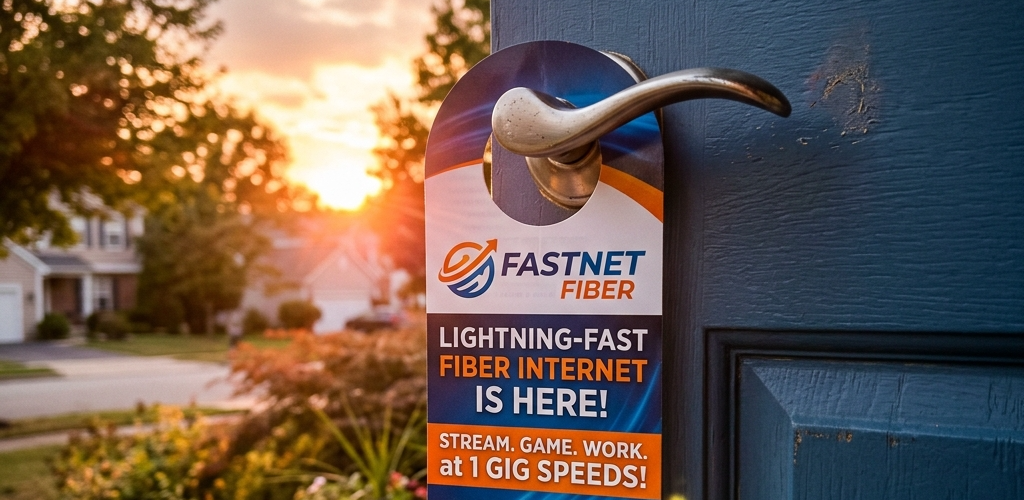
ISPs launching fiber in new subdivisions or territories face a marketing scale problem: each neighborhood has a slightly different competitive situation, demographic, and message. A single marketing person cannot produce custom copy for 12 simultaneous build-outs without cutting quality or burning out. AI can produce differentiated, neighborhood-specific copy quickly, letting your marketing lead focus on strategy and review instead of drafting.
Workflow
- 01Gather key inputs for each service area: neighborhood name, city, current incumbent(s), target demographic if known, key differentiators to emphasize
- 02Identify the format you need (postcard, door hanger, social ad, email, flyer)
- 03Run the prompt below, one neighborhood at a time or in batches
- 04Review for local accuracy (AI does not know your specific market, it will sometimes produce generic content that needs localization)
- 05Adjust for your brand voice
Prompts 3
What to Verify
- Local details are accurate (AI may generalize neighborhoods incorrectly)
- Pricing is current and matches your actual offers
- Differentiators match what you can actually deliver
- Tone matches your brand voice and community context
Competitive Intelligence and Overbuild Research
For ISPs facing overbuild threats from PE-backed fiber companies, cable incumbents, or new entrants with funding, early awareness is a strategic advantage. Traditional competitive research takes days of manual searching. AI can compress that research into hours by helping you systematically gather, organize, and synthesize publicly available information.
Important limitation: AI tools cannot access real-time information by default. Verify that the tool you are using has web browsing enabled (ChatGPT with browse, Perplexity, Claude with web access) or plan to paste in source documents for analysis.
Workflow
- 01Identify the competitor or market area you are researching
- 02Choose a tool with web access enabled for research gathering (Perplexity works well for this step)
- 03Use the research prompts below to gather and synthesize
- 04Run the analysis/brief prompts to structure findings
- 05Verify all specific claims (AI can hallucinate facts, especially funding amounts, dates, and coverage areas)
Prompts 3
What to Verify
- All specific facts (funding amounts, coverage claims, pricing) against primary sources
- Dates of news items, AI may conflate old and new information
- Any claims about competitor coverage before acting on them
Customer Support Templates and Response Guides
Tier 1 support at lean ISPs often relies on individual reps drafting responses from scratch for recurring issue types. This introduces inconsistency, slows resolution time, and means your best reps' communication habits are not scalable. AI can help you build a library of response templates that improve quality and speed across the team.
Prompts 3
Staff Onboarding Materials
Onboarding at a lean ISP is often underdocumented because no one has time to build the materials. New hires ramp slowly, rely on informal knowledge transfer, and sometimes learn the wrong way to do things because the right way was never written down. AI can help you build onboarding materials in hours rather than weeks.
Prompts 2
Grant and Regulatory Documentation
BEAD-funded operators and rural ISPs pursuing E-Rate, ReConnect, or state grant programs face significant documentation requirements. These documents follow predictable formats and require structured narrative writing, a task AI handles well. AI cannot fabricate your underlying data or certify compliance, but it can dramatically reduce the time your team spends on narrative drafting.
Prompts 2
Tips for Better Results
Be specific about your situation
The more context you give, the better the output. "I manage a 25,000 subscriber fiber ISP in rural Colorado" produces a better result than "I manage an ISP."
Tell AI who the audience is
"Write for a new field technician" vs. "write for our board of directors" produces very different documents. Specify every time.
Use it for first drafts, not final drafts
The goal is to get to 80 percent quickly, then apply your judgment for the final 20 percent. Do not publish AI output without review.
Verify every number
AI will use the numbers you give it, but it may also infer, round, or occasionally misrepresent figures in the output. Check every metric before sending anything external.
Iterate the prompt, not the output
If the first output is not right, adjust your prompt rather than editing the output manually. You will get better results faster.
Build a prompt library
Once you find prompts that work for your operation, save them in a shared document. Your team can use them without starting from scratch every time.
Do not use AI for real-time system data
AI does not have access to your , your ticketing system, or your network. It works on the text you give it. Keep these use cases in the knowledge-work lane.
Quick-Start Checklist
For operators who want to get started today, follow these steps in order. Your progress saves automatically.
- Pick one use case to start with (recommendation: outage communications or board reporting)
- Gather the specific inputs needed for that task (facts, data, notes)
- Copy the relevant prompt and fill in the variables
- Run it in ChatGPT or Claude (free tier is fine to start)
- Review the output, verify accuracy, adjust for your voice
- Use it and track the time saved
- Identify the next highest-value use case
- Build a shared prompt library document for your team

We lead with clarity, so connection can happen.
Sonar is a BSS/OSS platform built for Tier 2 and Tier 3 broadband operators. We work with ISPs across the United States and Canada who are scaling from 10,000 to 100,000 subscribers, the same operators this playbook was designed for.
We published this playbook because we believe operators at this stage deserve the same kind of practical AI guidance that large enterprises take for granted. It is tool-agnostic, vendor-neutral, and free to use and share.
For more resources on ISP operations, marketing, and back-office management, visit sonar.software.
Questions, answered.
Who is the ISP back-office AI playbook designed for?
It is written for general managers, operations managers, CFOs, and marketing leads at Tier 2 and Tier 3 broadband operators with roughly 10,000 to 100,000 subscribers who are running lean teams with back-office complexity that outpaces their headcount.
What back-office tasks does the playbook use AI for?
It covers eight knowledge-work use cases: outage and maintenance communications, technical documentation and runbooks, board and executive reporting, hyperlocal marketing copy, competitive intelligence and overbuild research, customer support templates, staff onboarding materials, and grant and regulatory documentation.
Do I need to integrate AI with my BSS or OSS to use this playbook?
No. The playbook requires no software integrations and no IT project; the prompts are tool-agnostic and work in ChatGPT, Claude, Gemini, and similar assistants, with no paid plan or BSS/OSS integration required.
Can AI handle network operations or real-time system tasks for an ISP?
No. The playbook explicitly excludes network operations, provisioning automation, and any task requiring real-time system access, because AI does not have access to your BSS, ticketing system, or network and only works on the text you give it.
See it on the platform
20 minutes wired to your operation.
An ISP-only specialist walks Sonar through your specific use case. No generic deck, no horizontal SaaS pitch.
Book a meetingThe Loop
ISP ops, weekly. No fluff.
Field notes, releases, and operator playbooks delivered every Tuesday morning.
Read by 2,400+ ISP operators · See last issue