The Toughest Tradeoffs in an ISP
Every ISP says everything matters, until competing priorities force a choice. Larry Weidig, Georgette Lopez-Aguado, and Rick Seemann rank the hardest tradeoffs in broadband: people, process, or technology; trust, employees, or market share; and what to save first when the business is on fire.
With Rick Seemann (VP of Product Management, Sonar Software), Larry Weidig and Georgette Lopez-Aguado
October 13, 2026 · 42:20 listen
Watch this episode
Watch it here, or listen in your app of choice.
Show notes
Every ISP says everything matters. Customer trust, revenue, operations, culture, technology, and people are all essential, but an operator cannot always protect or improve them at the same time. The real test is which one comes first when they start competing for the same attention.
On this episode of Bandwidth, Larry Weidig, Georgette Lopez-Aguado, and Rick Seemann force the hard choices. For each question they rank three options, reveal their answers at the same time, and defend them. Sometimes all three agree. More often they do not.
People, Process, or Technology: What Creates the Most Value?
All three put people first. Georgette's case is that every point of contact shapes the customer experience, so hiring well, and firing fast when needed, is foundational to the brand. Rick's reasoning is competitive: rivals can copy your processes and match your technology, and they may recruit a person away here and there, but they cannot replicate what your people bring to the business. Larry pointed to the quality field tech and the empathetic agent as the problems tools cannot touch.
The disagreement came after that. Georgette and Rick ranked process over technology. People need a road map from day one, and Rick argued that from the subscriber's side the underlying tech is close to indistinguishable when it is set up and tuned correctly, so process gives you more room to shape how value is perceived. Larry ranked technology second, reading the question as the internal platforms that support the customer: the automation that keeps great people from burning out.
What Is Hardest to Recover From?
Given customer trust, key employees, and market share, all three wrote the same order. Trust first. As Georgette put it, trust can take years to build and minutes to destroy, and even customers who stay will question your future decisions. Larry added that once a community decides you are unreliable, the other two no longer matter. Rick treats trust as a synonym for reputation, something you only influence indirectly, which makes it slow to turn around.
Key employees came second because tribal knowledge walks out the door with them, and rebuilding leadership and culture is expensive. Market share came last because it has more direct levers: better products, stronger execution, or acquisition. Georgette's summary was that you can buy market share, but you cannot buy credibility.
Which Customer Matters Most?
Georgette and Rick both ranked the most profitable customer first, then the largest, then the longest tenured. Revenue without profit does not fund growth, and profitable customers are what let you invest in everyone else. Georgette also noted that a large account can carry thin margins once you count the support load and expectations that come with it.
Larry put the longest-tenured customer first. In his experience those customers were the best brand ambassadors, and one of them could bring in ten profitable customers through referrals, which his team tracked with "how did you hear about us" and referral credits. Georgette cautioned against confusing sentimental value with business value, since plenty of long-term customers never refer anyone or leave a review.
Rick made a case for the largest customer as proof to the market of what you can deliver. Larry ranked it last because of concentration risk: when one account is a large share of revenue, losing it is hard to absorb. Georgette agreed that large accounts should not tip the scales so far that you lose track of the rest of the base.
Which Team Has the Biggest Impact?
This was the surprise of the episode. Georgette, who usually argues from customer experience, ranked network operations first. If the network fails, everyone else becomes reactive, and ideally customers do not need frequent truck rolls. They need the service to work.
Larry and Rick both ranked field operations first and network operations last. Field techs are the face of the ISP and often the only human interaction a customer ever has with it. Rick described network operations as table stakes, closer to an on and off switch, while field and support work like dimmer switches with far more range in the experience they create.
All three placed support in the middle, and all three admitted it could be argued into first. Customers reach out to support at their most frustrated, and a great agent can turn that into a good experience, while a poor one can solve the problem and still deliver a terrible one.
What Creates Loyalty: Trust, Convenience, or Performance?
Trust was first on every paddle. Georgette watches how operators communicate publicly during outages, and the pattern is consistent: customers forgive the occasional outage when they trust you to communicate honestly and fix the problem.
The split was over second place. Rick chose convenience, because a truly inconvenient customer experience stings and there is more range in how a company delivers convenience than in how it delivers performance. Georgette and Larry chose performance. Reliable internet is the core promise, and if performance consistently suffers, trust eventually erodes. Larry added that both are now largely expected and feel more transactional than loyalty building, so after trust it was close to a toss-up.
The Technology Triangle: Reliability, Innovation, or Affordability?
Georgette and Larry put reliability first. People do not care how innovative your network is if it is not dependable, and if you take reliability away the other two stop mattering. Rick put affordability first, with a clarification: affordable does not mean cheap. A premium business service can carry a large bill and still be affordable for that customer, but if the market cannot afford your offering, you do not have a business. Georgette countered that the economics have to work for the ISP as well as the customer.
Innovation came last for everyone. It should improve reliability or efficiency, not exist to check a marketing box.
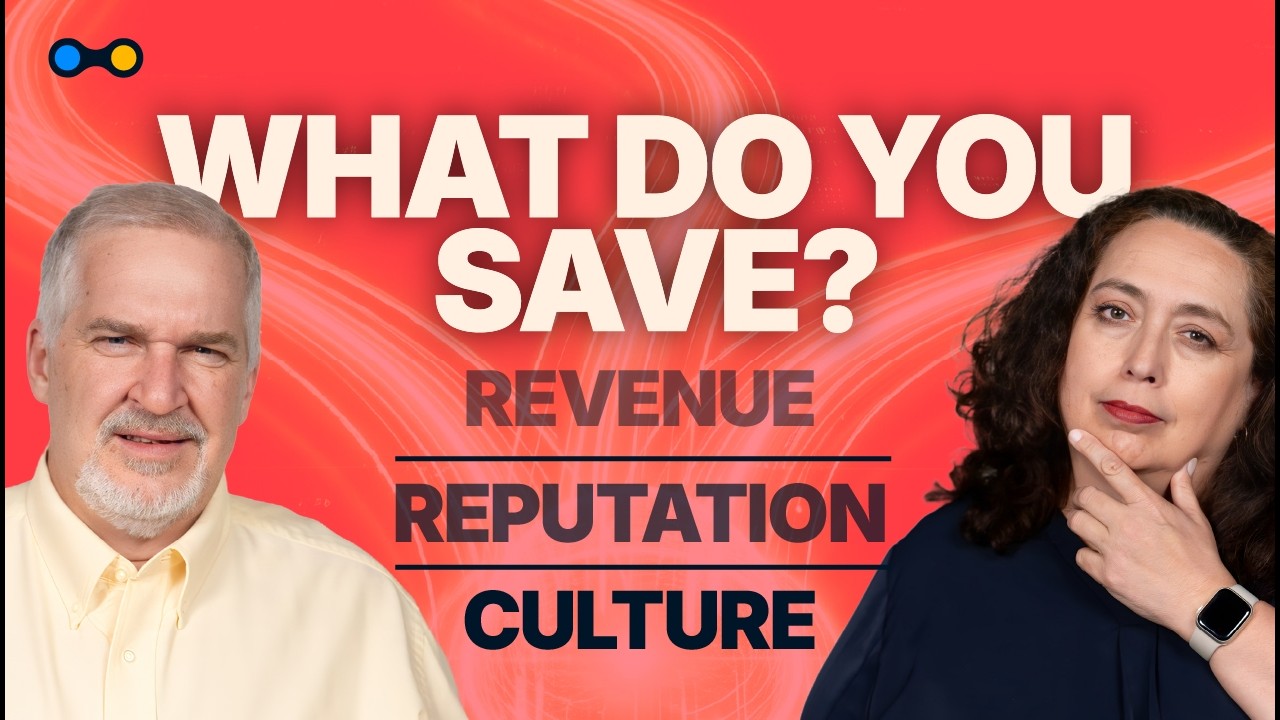
Your Business Is on Fire: What Do You Save First?
The final question allowed one answer: revenue, reputation, or culture. Georgette admitted her heart said reputation and her head said revenue, then settled on reputation, because protecting trust buys time to fix everything else. Larry also chose reputation, as the hardest of the three to rebuild.
Rick chose revenue. Reputation and culture can only be repaired through indirect effort, while revenue has direct levers, and if revenue is what is burning, there is no business left to repair the other two. He would save revenue first in order to survive long enough to fix the rest.
What the Rankings Had in Common
Georgette closed with the patterns: trust is the hardest asset to earn and the easiest to lose, people create a sustainable competitive advantage, technology is the enabler and not the strategy, and short-term financial decisions should rarely come at the expense of long-term credibility.
Asked what they would change after hearing each other, Rick moved technology above process, persuaded by Larry's point that process means little if the platform cannot deliver it consistently. Georgette moved the longest-tenured customer from last to second while keeping the most profitable customer first. She did not move network operations.
Catch the full conversation on the Bandwidth podcast.
Available now on Spotify, Apple Podcasts, and the Bandwidth YouTube Channel.
If you enjoyed this episode, be sure to subscribe wherever you get your podcasts so you never miss a conversation.
Questions, answered.
What creates the most value for an ISP: people, process, or technology?
+
All three hosts ranked people first. Competitors can copy processes and buy the same technology, but they cannot replicate the experience your field techs, support agents, and leaders create. Process and technology were ranked differently depending on whether technology meant the network or the internal platforms that support customers and staff.
What is the hardest loss for an ISP to recover from?
+
Customer trust. It takes years to build and minutes to lose, and it can only be rebuilt indirectly. Losing key employees comes next, because tribal knowledge leaves with them. Market share is the most recoverable, through better products, stronger execution, or acquisition.
Which customer should an ISP prioritize: the largest, the longest tenured, or the most profitable?
+
Two of the three hosts chose the most profitable customer, because profit funds growth and investment in every other customer. The third chose the longest tenured, because loyal customers who refer others can bring in more profit than any single account. All agreed that relying too heavily on one large account is a risk.
Does trust, convenience, or performance create more customer loyalty?
+
Trust. Customers forgive occasional outages when an ISP communicates honestly and fixes the problem. Performance and convenience are increasingly expected, so they keep customers satisfied but build less emotional loyalty than trust does.
If an ISP is in crisis, should it protect revenue, reputation, or culture first?
+
The hosts split. Two chose reputation, because it is the hardest to rebuild and protecting trust buys time to fix everything else. One chose revenue, because without cash the business does not survive long enough to repair its reputation or culture.