AI & Automation
Creative Revenue Streams for ISPs: Growing ARPU in the AI Era
Learn how ISPs can grow ARPU with AI upselling, digital bundles, and new revenue streams that transform connectivity into full digital experiences
Taneil Currie, Former Senior Manager, Growth Marketing
August 30, 2025 · 5 MIN · UPD JUN 16, 2026
ISPs can build creative new revenue streams in the AI era by moving beyond speed-and-price competition: bundling AI tools, SaaS apps, and smart home services, using AI to make support proactive and profitable, and positioning themselves as the trusted hub for a customer's entire digital life. The result is higher , lower churn, and durable differentiation.
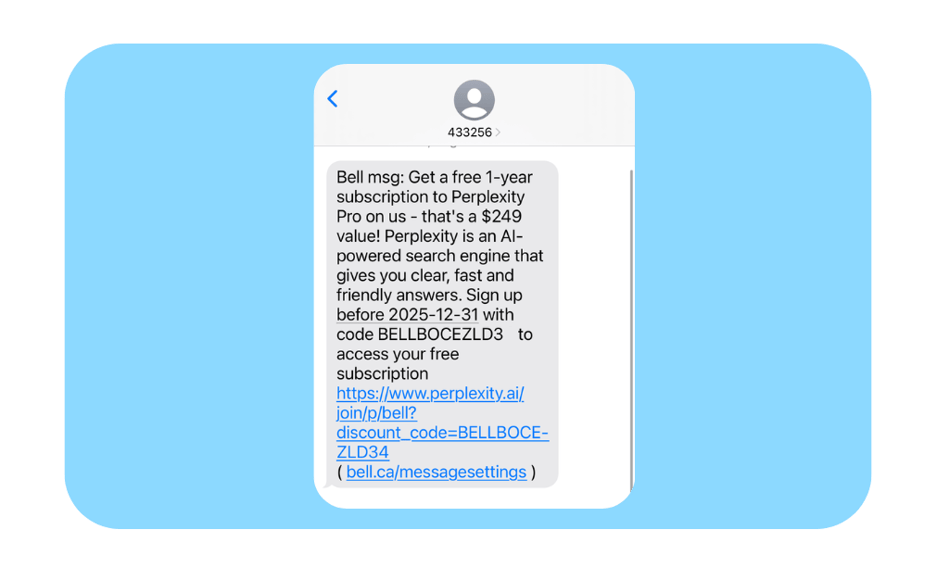
A few days ago, I got a text from my internet service provider, Bell. It wasn’t about billing or data usage - it was something unexpected. As one of Canada’s Tier 1 providers, they offered me a free one-year subscription to Perplexity Pro, an AI-powered research tool valued at $249.
That stopped me in my tracks. Not because I’m in desperate need of another subscription (though I’ll happily take free AI tools), but because of what it signaled: ISPs aren’t just selling internet anymore.
ISPs are beginning to shift. They’re evolving from basic connectivity providers into digital lifestyle enablers. The old revenue models built around broadband subscriptions, voice services, and hardware rentals are no longer enough. In an era where bandwidth is commoditized and competition is fierce, creativity is now a growth strategy.
And the best place to see that creativity in action? Look at what the Tier 1s are already doing.
What Smaller ISPs Can Learn from Tier 1 Providers
Bell’s Perplexity Pro bundle isn’t just a promo, it’s a move to stay relevant in a world where “fast internet” no longer feels like differentiation. By tying themselves to AI, Bell positioned their brand as innovative, modern, and tuned into what customers care about right now.
Regional and mid-sized ISPs don’t need Perplexity in their back pocket, but the lesson is clear: partnerships can transform perception. Whether it’s AI tools, SaaS apps, or digital lifestyle services, offering something unexpected creates a stronger story than “we’re fast and affordable.”
ISP Bundles That Sell More Than Speed
Most customers choose ISPs based on two things: speed and price. But those levers are maxed out as everyone is selling gigabit fiber or unlimited data, and everyone is racing to the bottom on cost. So if “faster” and “cheaper” aren’t winning plays anymore…what is?
Think beyond “speed + price.” What if your plans came with extras that people actually use?
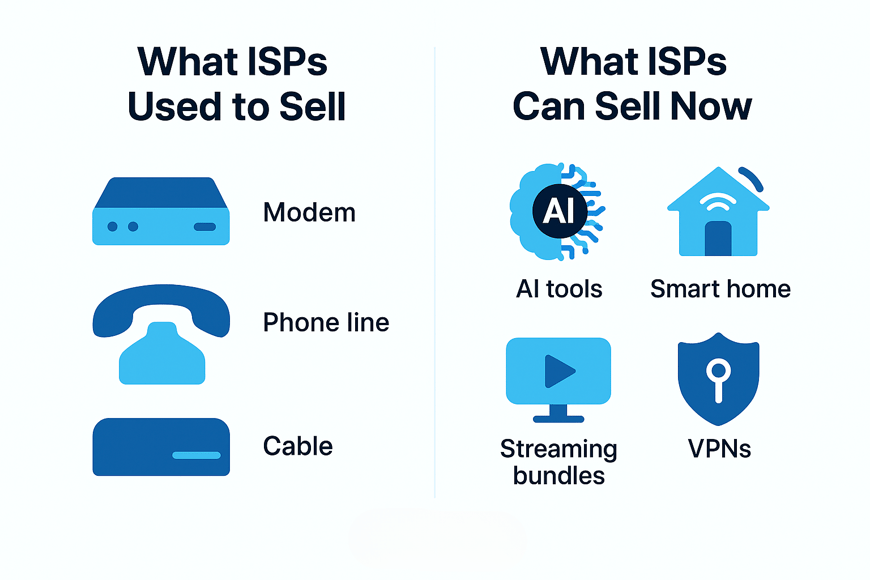
What if, instead, your packages felt like curated digital toolkits?
A family plan that comes with parental control software and premium security tools.
A remote worker bundle with cloud storage and an AI writing assistant baked in.
An entertainment package that throws in streaming credits or gaming boosters.
Suddenly, your customers aren’t comparing you to the ISP across town based on speed, they’re comparing you based on the lifestyle upgrade that comes with their plan.
And once you’re thinking in terms of lifestyle, the next question is: how do you make those services smarter and more profitable? That’s where AI steps in.
From Cost Center to Revenue Driver: AI in ISP Support
For customers, downtime is frustrating. For ISPs, support calls and truck rolls are expensive. AI bridges that gap.
Think managed Wi-Fi that automatically optimizes performance, reroutes traffic, or alerts support before the customer even notices a slowdown. That’s not “magic”, that’s AI making the internet feel effortless.
Or imagine a chatbot that doesn’t just answer questions, but proactively suggests, “We noticed you’re streaming 4K across multiple devices, would you like to explore our premium plan?” That’s support that pays for itself.
Done right, AI doesn’t replace human service. It makes it sharper, faster, and more profitable.
That’s a revenue opportunity hiding in plain sight. And if AI can make support more profitable, partnerships can take that same thinking even further.
Owning the Digital Home
Think about the other services people are already paying for monthly: cloud storage, streaming apps, smart home devices, family budgeting tools. Now imagine they all came bundled through the ISP they already trust to run their home network.
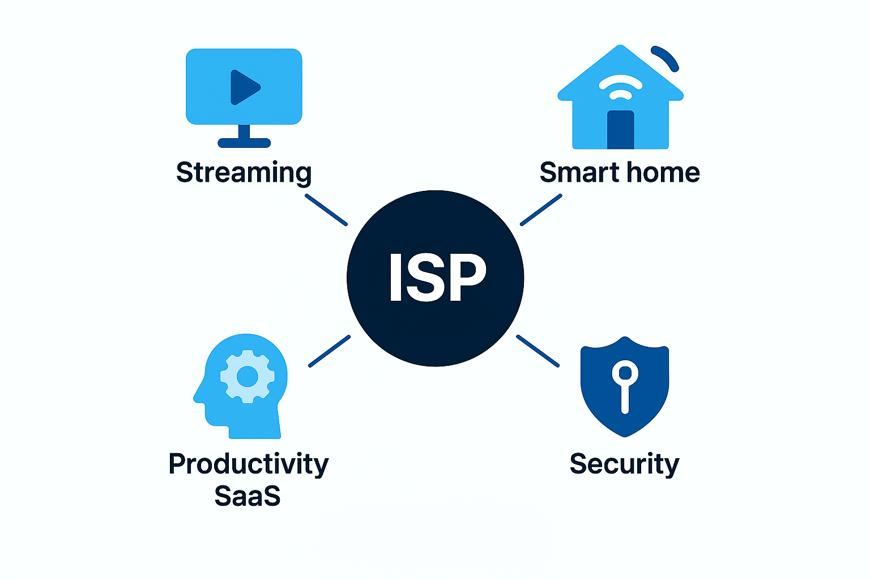
Regional ISPs can win here by playing aggregator. You don’t need to build the next Netflix or Nest, you just need to partner with them. Bundle a smart home starter kit with Wi-Fi. Offer discounted SaaS tools through your billing system. Position yourself as the hub that simplifies your customer’s digital life.
Every home is building its own digital stack. The ISP that simplifies and packages it earns loyalty and recurring revenue.
Start Small, Scale Fast
Here’s the good news: you don’t need a billion-dollar lab to begin.
Pick one or two services to test as part of your premium packages.
Use your customer data (platforms like Sonar make this easy through unified billing and subscriber management) to target the right households.
Track results, does ARPU go up? Does churn go down? Do support calls decrease?
The beauty of this model is scalability. Start small, prove ROI, then layer in more partnerships and bundles over time. Before long, you’ve repositioned yourself, not just as an ISP, but as a digital experience provider.
The Future ISP Isn’t Just Connectivity
The takeaway from Bell’s move is clear: the ISP of tomorrow won’t just deliver fast internet. They’ll deliver curated digital experiences.
Bundles that make life easier. AI-driven tools that make service feel seamless. Partnerships that add value far beyond connectivity.
For ISPs, this isn’t a “nice-to-have.” It’s the path to differentiation, revenue growth, and long-term loyalty in a world where bandwidth alone is no longer enough.
The future ISP won’t be judged by how many Mbps they deliver, but by how much value they create around the connection itself. The ones who embrace that shift now will own the market tomorrow.
Frequently Asked Questions
How can ISPs grow ARPU without competing on speed and price?
By bundling services customers actually use, like AI tools, cloud storage, parental controls, security, and streaming credits, ISPs turn a plan into a lifestyle upgrade. That reframes the comparison away from gigabit-versus-gigabit and creates recurring revenue beyond connectivity.
How does AI help ISPs turn support into a revenue driver?
AI can optimize managed Wi-Fi, reroute traffic, and flag slowdowns before customers notice, reducing expensive support calls and truck rolls. It can also power proactive upsell prompts, making service sharper, faster, and more profitable without replacing human agents.
How can a smaller ISP start without a big budget?
Start small: test one or two premium services, use customer data platforms like Sonar to target the right households, then track whether ARPU rises, churn falls, and support calls drop. Prove ROI first, then layer in more partnerships and bundles over time.

Questions, answered.
How can ISPs create new revenue streams in the AI era?
ISPs can grow by moving beyond basic connectivity and acting as digital lifestyle enablers, since broadband, voice, and hardware rentals alone no longer drive growth. Creativity and partnerships have become the growth strategy in a market where bandwidth is commoditized.
How do ISPs grow ARPU beyond selling internet speed and price?
Bundling extras like parental controls, cloud storage, AI assistants, or streaming credits reframes ISP plans as lifestyle upgrades instead of speed-and-price comparisons. This shifts the conversation away from commoditized bandwidth and toward full digital experiences.
How can regional ISPs compete with new bundled revenue models?
Regional ISPs can win by acting as an aggregator that bundles smart home, SaaS, and streaming services through the billing relationship they already own. This lets smaller providers add value without competing only on speed and price.
How can AI turn ISP customer support into a revenue driver?
AI can turn ISP support from an expensive cost center into a revenue driver through proactive Wi-Fi optimization and upsell prompts. Instead of only resolving problems, support interactions can surface relevant offers and improvements.
See it on the platform
20 minutes wired to your operation.
An ISP-only specialist walks Sonar through your specific use case. No generic deck, no horizontal SaaS pitch.
Book a meeting