AI Won’t Replace Support. But It Will Redefine It.
AI is transforming support, but the human touch remains crucial. Ready to learn how to balance automation and empathy for a seamless customer experience?
August 19, 2025 · listen
Listen to this episode
Play it right here, or open it in your app of choice.
Show notes
Georgette Lopez-Aguado : Aug 19, 2025, 10:52:45 AM
There’s no polite way to say it: support is changing fast, and not everyone’s ready.
In Episode 6 of Bandwidth, we dug into the big question: is AI going to save support teams or just replace them? And maybe more importantly, what happens to the people who’ve been holding customer experience together with duct tape and overtime?
Let me be clear up front. I don’t believe AI is coming for everyone’s jobs. But I do believe we’re headed toward a tipping point. The support floor as we know it is going to look very different, very soon.
If you’ve called a major company lately, you’ve probably noticed something: fewer humans. Some non-ISP industries have already cut their frontlines in half, betting that AI can handle the majority of interactions. And in many cases, it’s working. But broadband is a different beast.
Your average broadband subscriber isn’t just asking for a billing recap. They’re trying to figure out why their kid’s school Zoom won’t load or why their security system just went offline. There’s stress. There’s urgency. There’s context that a chatbot can’t always capture, no matter how many times it asks if you’ve rebooted the modem.
Here’s the nuance. AI can take on some of that volume, and in many cases, it should. It just has to be trained right and supported by actual people when things go off script.
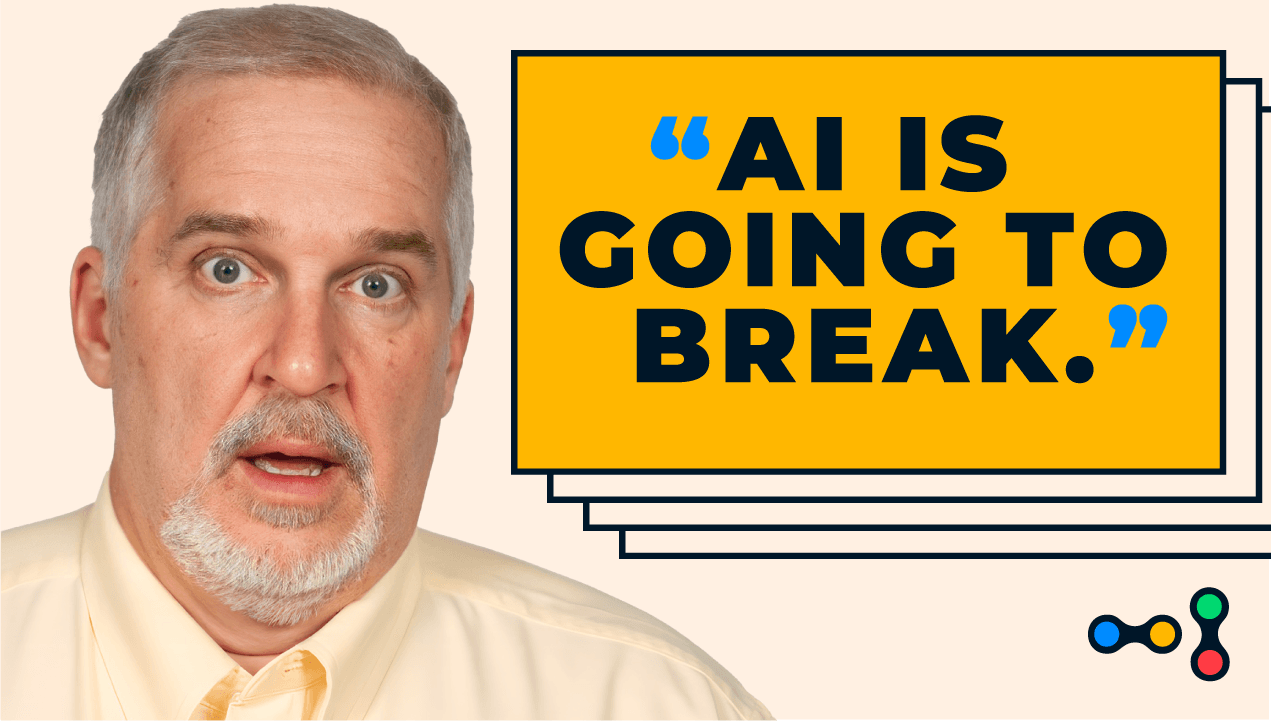
Larry nailed it in the episode when he said we still need a human circuit breaker.
Because AI will break. Models will fail. Power will go out. Data will get messy. And when your entire tier one function is automated without a fallback plan, you're risking more than long wait times. You’re risking your reputation.
Imagine a subscriber who’s already frustrated being looped in circles by an AI that can’t understand their issue. Now imagine there’s no one on the other end who can step in. That’s how you lose a customer not just for a week, but for good.
The question isn’t whether we should use AI. We already are. The question is how we do it without burning bridges.
Good AI can level up your team. It can clear out repetitive tasks and give your reps time to handle deeper, more meaningful issues. It can reduce burnout. It can make tier one support faster, cleaner, and less frustrating if the workflows are built with care.
But if you’re using AI as an excuse to slash headcount without thinking through reallocation, retraining, or even basic continuity planning, that’s not transformation. That’s short-sighted.
There will always be situations that require a real human being.
Maybe it’s a billing dispute that doesn’t follow the usual logic. Maybe it’s a customer whose frustration has nothing to do with their internet connection. Maybe it’s something deeply personal. (Yes, I told the story again about the tech who had an affair with a subscriber’s spouse. That call needed a human.) The point is, people still matter. Especially in this industry.
So if you’re leading a support team right now, here’s what I’d be thinking about:
What parts of support can AI handle well, and what needs to stay human?
Are we giving our people a path forward, or just phasing them out?
Have we built redundancy into our AI tools, or are we putting all our eggs in one algorithm?
Are we training our AI to serve the customer, or just the bottom line?
In three years, I think tier one will be mostly automated. That’s not fearmongering. It’s realism. But “automated” doesn’t mean “impersonal.” And it definitely doesn’t mean “unaccountable.”
We have a chance right now to define what that next version of support looks like. We get to decide what role humans play, how we train them, and how we keep real customer experience at the center of it all.
Because AI might be good at solving problems fast. But it’s not going to care if your customer’s problem really got solved.
Until next time, remember: when you connect communities, you unlock what’s possible.
You can listen to this episode of Bandwidth on Spotify or Apple Podcasts or watch the full conversation on our YouTube channel .
Here are all the links to the episodes. Youtube
Spotify (Video will be up shortly; it takes a while for Spotify to finish processing)